

What Does it help
Admission to the USA provides comprehensive guidance for both domestic and international students seeking higher education opportunities in American universities. Through www.addmission2usa.com, applicants receive expert support on university selection, GPA and test score requirements, scholarship and assistantship opportunities, and crafting strong personal statements and recommendation letters. International students also receive step-by-step help with F-1 visa preparation, financial documentation, SEVIS requirements, and cultural readiness. Domestic students gain guidance on application timelines, program comparison, financial aid, and transfer pathways. The platform ensures every student—whether from the U.S. or abroad—receives clear, practical, and personalized advice to achieve their academic goals.


How to Get Assistantship Funding in USA Universities?
Securing assistantship funding in U.S. universities requires strong academic performance, relevant experience, and a well-structured application. Students should highlight research skills, publications, teaching experience, or professional achievements when applying for Graduate Assistantships (GA), Teaching Assistantships (TA), or Research Assistantships (RA). Contact professors early, express interest in their work, and attach a strong CV and statement of purpose. Many departments offer funding based on academic merit, GRE/GMAT scores, and faculty recommendations. Apply before priority deadlines and check departmental pages for available positions. Assistantships often include full tuition waivers and monthly stipends, making graduate study in the USA more affordable.


WHAT ARE THE TOP UNIVERSITIES OF THE WORLD?
The world’s top universities are renowned for academic excellence, innovative research, and global impact. Harvard University and MIT consistently lead in rankings, excelling in fields like business, engineering, and technology. Stanford University and Oxford University offer diverse programs and cutting-edge facilities. Cambridge University, known for its rich history, rivals Caltech in STEM innovation. Imperial College London and University College London excel in medicine and engineering. ETH Zurich dominates Europe in technology, while University of Chicago and Columbia University stand out in social sciences. Tsinghua University and University of Tokyo symbolize Asia’s academic prowess.


Why Studying in the USA is the Best Choice
Studying in the United States has long been a dream for millions of students worldwide. The U.S. is a global leader in higher education, attracting students from every corner of the world who seek top-tier academic experiences, cutting-edge research opportunities, and a foundation for lifelong success. This attraction is no surprise, as the country is home to an array of esteemed institutions that have set the benchmark for educational excellence, including Harvard University, Massachusetts Institute of Technology (MIT), and Stanford University. These schools, among many others, consistently rank among the best globally, offering programs that cater to a diverse range of fields and interests.
HOW CAN I STUDY IN THE USA?
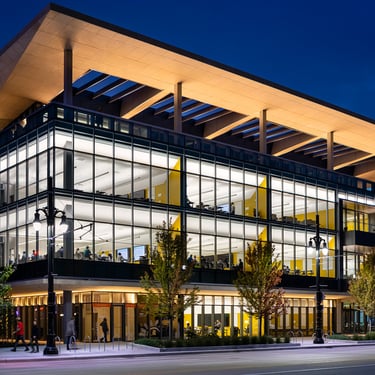


Studying in the USA offers world-class education, diverse programs, and global career opportunities. To begin, students must choose their major, research universities, and understand admission requirements. Undergraduate applicants need high school transcripts, English test scores, recommendation letters, a personal statement, and financial proof. Graduate applicants require a bachelor’s degree, CV, SOP, and sometimes GRE/GMAT scores. Many universities offer scholarships, assistantships, and tuition waivers to reduce costs. After receiving an I-20, students must pay the SEVIS fee and attend the F-1 visa interview. With proper preparation, studying in the USA becomes an achievable and rewarding academic journey.
CAN AN F-1 VISA STUDENTS WORK IN THE USA?


Yes, F-1 visa students can work in the USA, but only under specific conditions set by U.S. immigration regulations. Students may work on-campus for up to 20 hours per week during the academic year and full-time during breaks. Off-campus employment is restricted and requires prior authorization. Students may apply for Curricular Practical Training (CPT) for internships related to their program, or Optional Practical Training (OPT) for up to 12 months of work after completing their degree. STEM students may receive an additional 24-month OPT extension. Working without authorization can violate visa status and lead to severe consequences.


How is the Education System of USA?
The Transformative Impact of a U.S. Education. Graduating from a U.S. university can be a transformative experience, one that prepares individuals to ignite change across the world. The United States is known for its commitment to academic excellence, innovation, and research-driven education, equipping graduates with critical thinking skills and a passion for discovery. U.S. universities encourage students to think beyond boundaries, questioning norms and exploring new possibilities, which fosters an inventive spirit. Graduates leave not only with expertise in their chosen fields but with the courage to tackle complex global challenges and lead with insight and purpose.
Another unique feature of a U.S. education is its diverse, multicultural environment. Students from various backgrounds come together, exchanging ideas and perspectives that broaden their understanding of the world. This immersion in diversity teaches them to appreciate and adapt to different viewpoints, which is invaluable in today’s interconnected society. Graduates who have studied alongside peers from different cultures are often more empathetic and globally minded, qualities that enable them to lead with inclusivity and respect.
Furthermore, the emphasis on experiential learning in U.S. institutions empowers graduates with real-world experience. Through internships, research projects, and community engagement, students gain practical skills and hands-on knowledge that make them effective in professional settings worldwide. They leave with not only academic knowledge but a sense of confidence and adaptability, ready to make a tangible impact.
Armed with knowledge, experience, and a global perspective, U.S.-educated graduates possess the tools to drive progress and innovation, inspiring and uplifting communities across the globe.
Guidance
Your path to studying in the USA.
cONTACT
Support
bee@usadmission.net
LibGoal© 2024. All rights reserved.